In short
- Grade 304: the most widely used grade. It suits general work such as filtering in factories, raw water filtration in agriculture and household items, and it costs less.
- Grade 316: contains molybdenum, so it resists corrosion from salt, chlorides and acids better. It suits coastal sites and the food, pharmaceutical and chemical industries.
- Grade 316L: a low-carbon version of 316 for parts that are welded.
How the composition differs
All three are austenitic stainless steels. The main differences are the nickel and molybdenum content, and the lower carbon content of 316L.
| Grade | Also known as | Chromium (Cr) | Nickel (Ni) | Molybdenum (Mo) | Carbon, max. |
|---|---|---|---|---|---|
| 304 | AISI 304 · SUS 304 · DIN 1.4301 | 18–20% | 8–10.5% | None | 0.08% |
| 316 | AISI 316 · SUS 316 · DIN 1.4401 | 16–18% | 10–14% | 2–3% | 0.08% |
| 316L | AISI 316L · SUS 316L · DIN 1.4404 | 16–18% | 10–14% | 2–3% | 0.03% |
Approximate values to AISI standards.
How corrosion resistance differs
The 2–3% molybdenum in grade 316 helps the surface resist pitting caused by chlorides, such as salt, sea spray, chlorinated water and some chemicals. In these conditions, small rust spots form on grade 304 wire more easily.
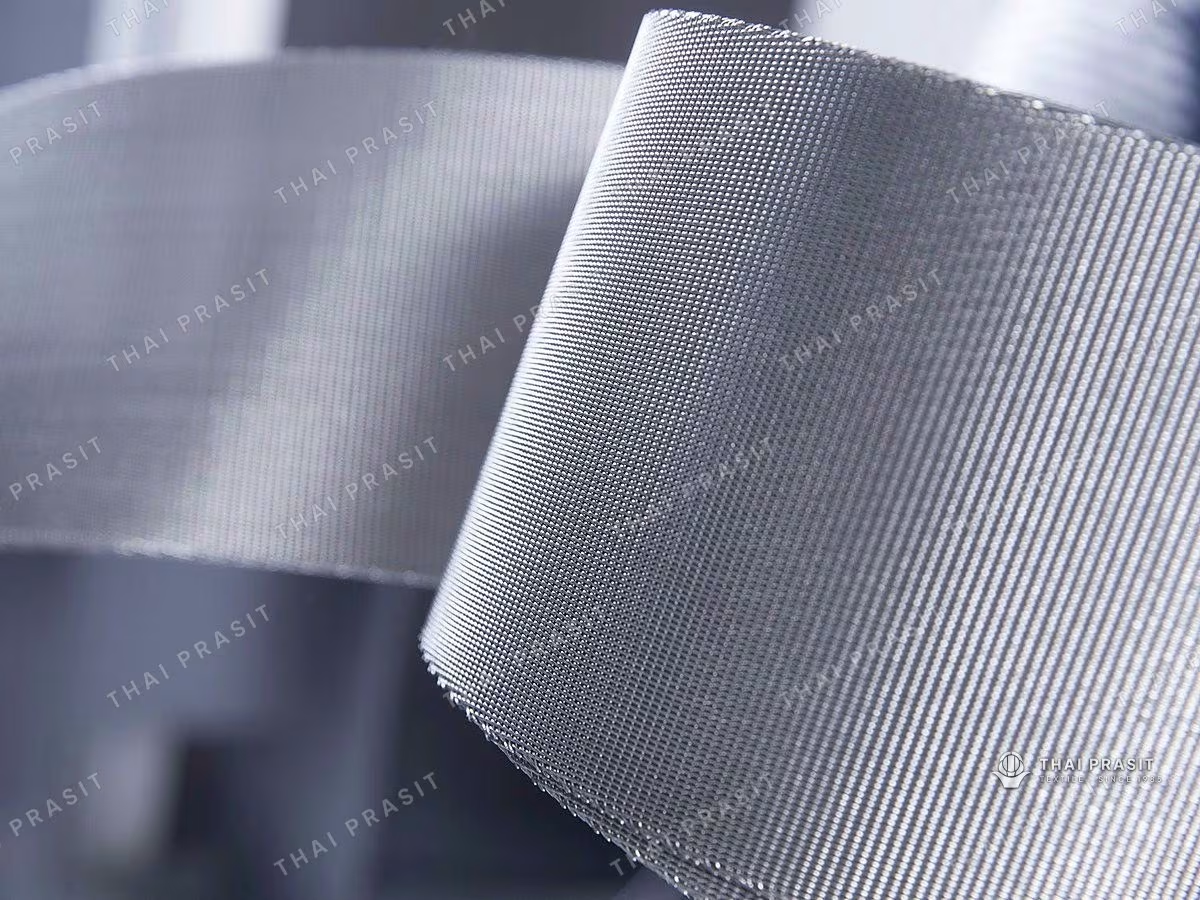
This matters especially for wire mesh, because fine mesh uses wire only 0.025–0.053 mm thick. Even slight corrosion can break the wire or distort the openings, so it pays to choose the right grade from the start.
Grade 316 does not resist every chemical. For concentrated chemicals or high temperatures, tell our sales team the substance, its concentration and the temperature so that they can advise you.
Choosing a grade for the job
| Application | Recommended grade |
|---|---|
| General indoor use, plastic extruders, raw water filtration in agriculture, syrup filtration, kitchen strainers and flour sifters | 304 |
| Coastal sites or places exposed to sea spray | 316 |
| Food processing involving salt or acids, pharmaceuticals and chemicals | 316 |
| Parts with welded edges or welded assemblies | 316L |
The low carbon content of 316L reduces intergranular corrosion around welds. For parts that are not welded, grade 316 offers much the same corrosion resistance.
Why the prices differ
Grade 316 contains more nickel and adds molybdenum, so its raw material costs more than grade 304. If the mesh will not be exposed to salt, sea spray or chemicals, grade 304 is the better value.
How to tell 304 from 316
You cannot tell them apart by eye, and a magnet does not help either: neither grade is magnetic in its normal state, although both may become slightly magnetic after wire drawing and weaving. The reliable way is to test the wire with an XRF analyzer, which tells 304 from 316 by the molybdenum content.
Grades in our wire mesh range
- Plain weave: mesh 10–200 in grade 304; mesh 150–200 also in grade 316
- Twill weave: mesh 250–500 in grade 316
- Plain dutch weave: grade 304 in all sizes
- Finished filters: made to your drawing, in the grade the job needs
For mesh counts and wire sizes not in the tables, please ask our sales team.
Still not sure?
Send us the mesh count, wire size and how the mesh will be used, such as the liquid being filtered, the temperature or the installation site. Our sales team will recommend a suitable grade and send you a quotation.