What it is used for
- Marking out construction sites and work areas so they are clearly visible
- Fencing off pits, ponds and trenches to warn people away
- Crowd lines at sports and events, and extra marking during road works
- Temporary fencing in gardens and on farms
What safety fence cannot do
Safety fence is a barrier and a warning. It is not fall protection and not a net to catch people or falling materials. Building edges, scaffold edges and deep excavations with a fall risk need guardrails or equipment that meets the safety standards required by law. On roads open to traffic, use the barriers, cones and signs the authorities require; safety fence can only add to them.
Choosing the right grade
- Weight: from 57 to 615 g/m², in light, medium and heavy duty. For long installations or windy sites, choose a heavier grade.
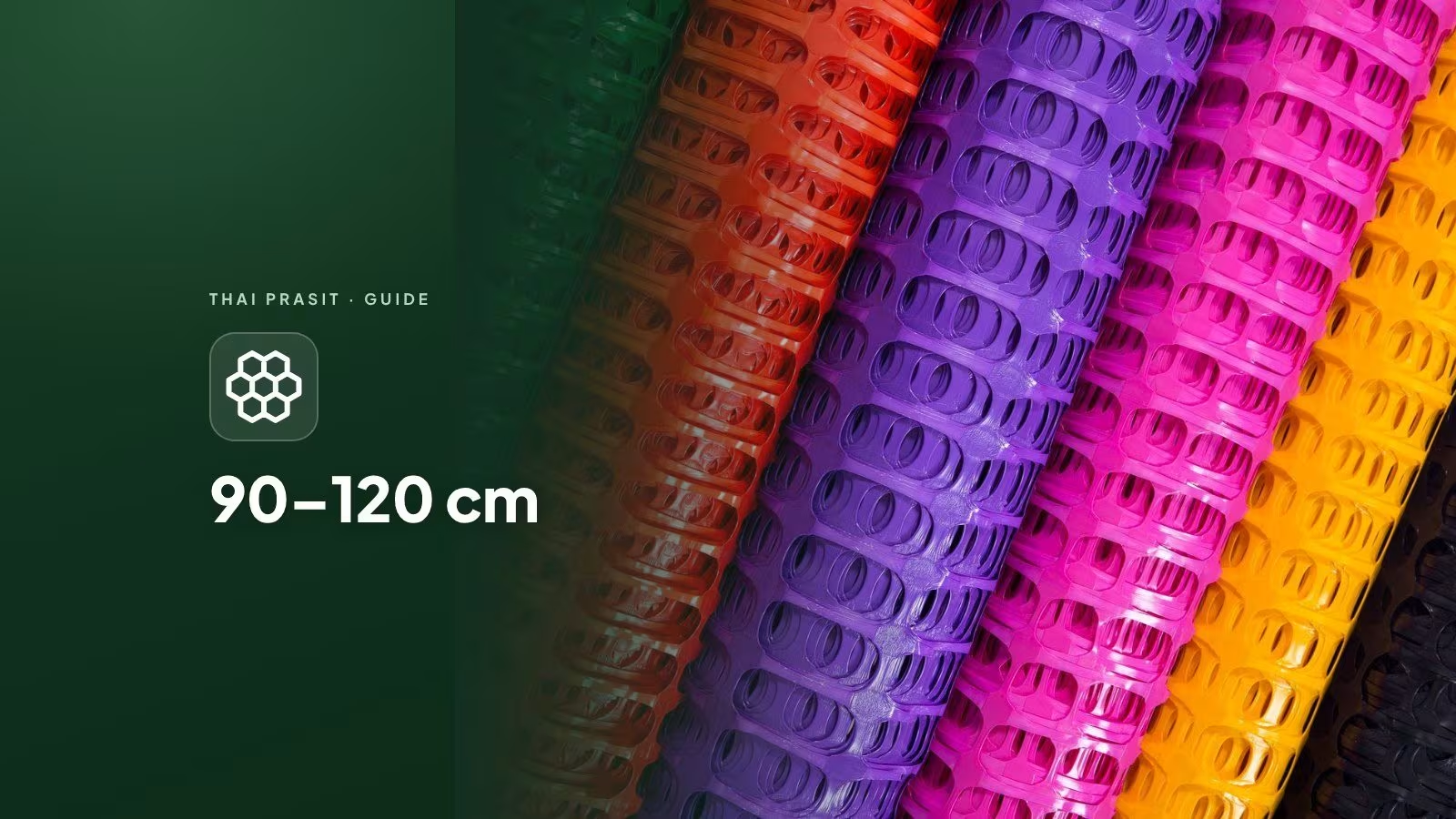
- Width: 90, 100 and 120 cm, in 25–50 m rolls.
- Color: orange is the most visible on site. Green, blue, yellow, black and two-color versions are also available.
- Raw material: 100% virgin material has an estimated service life of about 2 years, recycled material about 1 year.
The service life of plastic products depends on sunlight, temperature, humidity, chemicals and installation. Any figure is an estimate from typical use, not a guarantee.
Installation
- Set posts every 1.5–2.5 m: steel T-posts, rebar or timber. If you use rebar, cap every bar so nobody can fall onto an exposed end.
- Unroll the fence from the first post and fix it with cable ties in at least three places per post: top, middle and bottom.
- Tension it post by post. On long runs, thread a rope or wire through the top row of openings so the middle does not sag.
- At corners, use double posts or a brace, because corners are pulled in two directions.
- Keep the bottom edge close to the ground so people and animals cannot crawl under.
While it is in use
Walk the fence line every day, re-tension sagging sections and replace parts that are torn or so faded they are hard to see. When the job is finished, roll the fence up and store it in the shade: if it is still in good condition it can be used again.